
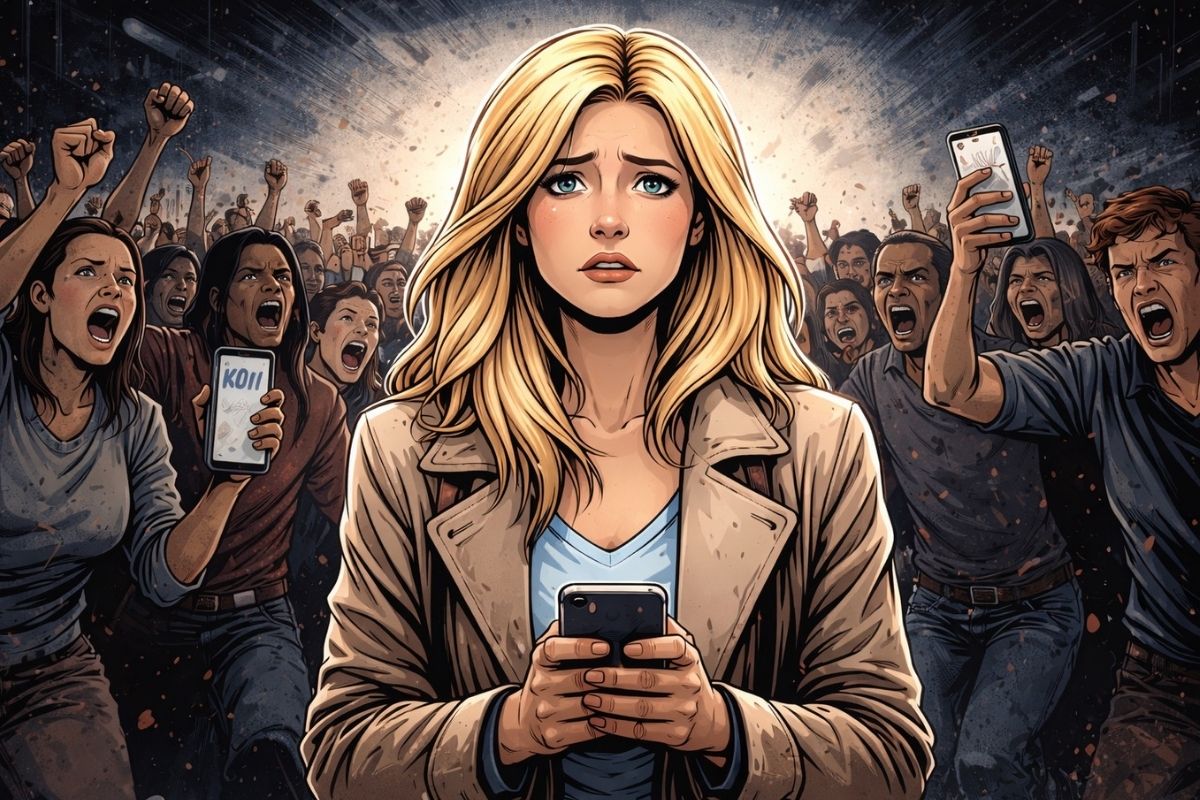
Kristin Cabot, the former HR chief caught in the viral Coldplay kiss-cam clip, has come forward to describe what happened and what came after. She says the backlash included death threats and doxxing.
What started as a messy concert moment turned into a case study in how fast someone can be cast as the villain, even before the full story is known, and how quickly the crowd decides the punishment.
A 16-second clip that changed everything
According to People, Kristin Cabot said the 16-second video clip that went viral after a July 2025 Coldplay show at Gillette Stadium exploded under the hashtag #coldplaygate.
An event that dragged her reputation and family into the eye of a storm.
In Cabot’s interview, she owned the mistake, blaming “a couple of High Noons” and calling her behavior inappropriate, but she also drew a firm line between bad judgment and the harassment that followed.
The clip looked like typical jumbotron fun until Coldplay’s Chris Martin joked from the stage that the pair might be having an affair, and the internet did what it does best.
From that point, multiple outlets including Vanity Fair and ABC News dug into the story, connecting to the company, Astronomer. They in turn launched an internal review as the story spread beyond gossip into a workplace leadership scandal.
A corporate mess that became a public pile-on
The line that sticks out is “my kids were afraid that I was going to die.” A line was reported in Entertainment Weekly’s write-up of her comments.
That’s not a PR move, it’s a parent talking about fear showing up in the kitchen, in the car, in the quiet moments when you realize strangers have your name and all basic decency appears out of the window.
Beyond the threads, doxxing came next. Business Insider noted Cabot described hundreds of calls a day. She upped home security amidst a feeling that she’d been branded for life.
In the same Business Insider report Cabot is noted as saying she received threats that referenced everyday routines, the kind of thing that makes a normal errand appear to be a risk.
We can’t just ignore the corporate ethics in the story. Having an HR leader appear to drift toward a relationship with the CEO is a bad look, even before you touch the “power dynamics” conversation. But Cabot acknowledged that much.
Here’s the catch, the reports from People suggest Astronomer’s board still wanted her to return after the internal process, which makes all the hate even more unnecessary.
Cabot said that she believes gender played a role in how this played out. Business Insider reported she felt she took the bulk of the abuse. When you look at the coverage, which was heavily towards Cabot, it’s hard to say otherwise regardless of your politics.
The timing also mattered according to Cabot as both she and Byron, the man in the video with her, were in the middle of marital separations when the clip was filmed. Regardless of that fact, the public narrative quickly locked into “affair” anyway.
In hindsight, a statement earlier in the fall-out about her marital status might have cooled some speculation, but whether that would have stopped the pile-on, nobody can say.
What happened next
Reports from People and Business Insider suggest Cabot ultimately resigned, and Byron, the CEO, also stepped down, but the public heat didn’t split evenly.
Cabot talked about the career fallout, and about being treated as “unemployable,” while Byron has largely stayed quiet in public coverage. That silence created a vacuum, and opinion filled it.
This isn’t the first time a public pile-on has occurred. For example, Ghostbusters fans will remember what happened to Leslie Jones in 2016. ABC News reported she faced vicious racist and misogynistic attacks on Twitter during the movie’s release window.
Rose Tico’s story in Star Wars is another one that also stands out. Variety reported Kelly Marie Tran spoke out after racist harassment helped drive her off social media, and Vanity Fair covered how she described spiraling under the weight of it all.
As a movie fan, and long-time Star Wars nerd, I get the discourse about the movies, they weren’t good. However, I don’t get the personal attacks. They didn’t write the scripts or direct the movies.
Additionally, the Depp–Heard trial showed how harassment can become a spectator sport. Time reported Amber Heard testified about receiving daily threats and public humiliation as the case unfolded.
What’s unsettling is how regular this cycle is becoming. Something goes viral, a villain is cast quickly, and people attack in digital ways that no one is prepared for.